What is a Linux Panel Pc: introduction and how it works
by MectIn the era of Industry 4.0, industrial automation plays a crucial role, pushing toward innovation and efficiency. Among the technologies that are shaping this future is the Linux Panel PC, a solution that combines flexibility and power to meet the increasingly complex needs of industrial plants. In this article, we will explore what Linux Panel PCs are, how they differ from PLCs and HMI panels, their historical evolution, advantages in their use, and key components, as well as the most useful programming languages.
What is a Linux Panel PC?
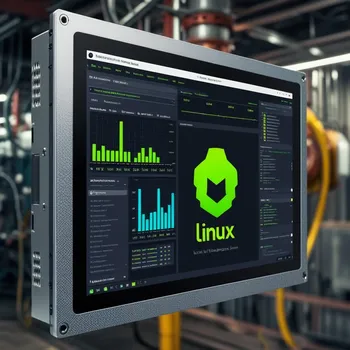
A Linux Panel PC is a hybrid device that integrates the functionality of an industrial computer with that of a human-machine interface (HMI). Equipped with the Linux operating system, it offers flexibility and customization, making it ideal for applications requiring advanced control and interoperability. Mect, a leading manufacturer of automation devices, offers a range of Linux Panel PCs, such as the LPC4100, that combine robust design with state-of-the-art technologies.
Differences between Linux Panel PCs, PLCs and HMI Operator Panels
- PLC (Programmable Logic Controller): These are controllers dedicated to controlling industrial processes through preprogrammed logic. They are robust and ideal for applications requiring real time and reliability.
- HMI Operator Panels: Interfaces that allow operators to interact with machines and systems. They provide graphical displays and real-time monitoring, but often require an external controller such as a PLC.
- Linux Panel PC: They integrate HMI capabilities with those of a computer, providing a versatile platform for development and integration. They support multiple applications, from SCADA monitoring to edge computing, and are customizable with Linux.
History and Evolution
Industrial automation has gone through several phases. From its beginnings with electrical relays, it moved on to PLCs in the 1960s, which revolutionized process control. With the advent of computers, HMI panels appeared, improving human-machine interaction. Today, Linux Panel PCs are the natural evolution, integrating control, monitoring and data analysis into a single platform, thanks to the flexibility of Linux and IoT connectivity.
Advantages in Industrial Automation
- Flexibility and Scalability: Adaptable to various applications, from line control to SCADA supervision.
- Cost-Effectiveness: Reduce costs by eliminating the need for separate devices for control and display.
- Integration: They support industrial protocols such as Modbus and OPC-UA, facilitating integration with other devices.
- Computing Power: Ability to perform complex tasks such as predictive maintenance and local artificial intelligence.
Mect leverages these features with solutions such as the LPC4100, which offers BIOS customization and splash screen, ensuring a tailored experience for each customer.
Main Components and Programming Languages
- Hardware: Touchscreen display, ARM processors, RAM and eMMC memory, Ethernet and USB connectivity, digital inputs/outputs.
- Software: Linux operating environment with support for Python, C/C++, Node.js and Docker. Tools such as Node-RED and Grafana simplify development and monitoring.
Useful programming languages include Python for quick scripts, C/C++ for high-performance applications, and Node.js for real-time applications. These tools, supported by Mect, enable the full potential of the Linux Panel PC.
Conclusion
The Linux Panel PC represents a quantum leap in industrial automation, offering an integrated and versatile solution. With its adaptability and support for multiple technologies, it is the ideal tool for those seeking to optimize processes and innovate. Mect, with its portfolio of advanced devices and customized services, is the ideal partner for those who want to take full advantage of the opportunities of Industry 4.0.