
Transition 5.0: the role of data visualization in industrial energy conservation
by MectIn today's industrial environment of increasing focus on sustainability, efficiency and reduced operating costs, visualization of energy data is a strategic tool for companies. Having clear, up-to-date and easily interpreted information enables the transformation of raw data into informed operational decisions.
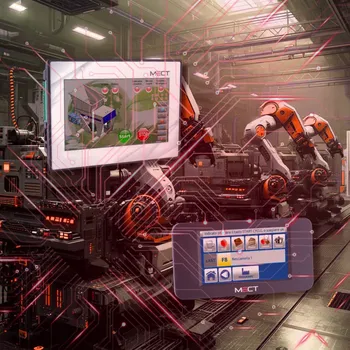
With advanced HMI solutions such as those offered by Mect, energy data can be made accessible directly at the machine or supervisory level, fostering a data-driven approach to energy management.
The advantages of energy data visualization
Proper visualization of energy data enables companies to:
- Monitor consumption in real time
Keeping track of energy consumption trends allows you to quickly identify anomalies, waste or inefficient situations, taking timely action on processes. - Identify energy-saving opportunities
Historical data analysis enables comparison of production cycles, lines or machines, identifying areas where action can be taken to improve overall efficiency. - Improving Productivity and Reducing Costs
More efficient use of energy translates directly into lower production costs and increased plant competitiveness. - Support certifications and tax breaks
The availability of structured, traceable energy data makes it easier to obtain energy efficiency certifications and access incentives and tax breaks.
Configuring a Mect HMI to display energy KPIs.
Mect HMIs provide a flexible and powerful solution for energy data collection, processing and visualization. Setting up an energy KPI monitoring system is done through a few key steps.
Connection to measuring devices
The Mect HMI is connected to energy measurement devices, such as electricity meters, network analyzers or flow sensors, using industry-standard protocols (e.g., Modbus TCP).
Configuration of measurement parameters
Through Mect's development tools, it is possible to configure the parameters needed to collect energy data, such as:
- power consumption
- active and reactive power
- voltage
- current
- frequency
Creation of display screens
The acquired data can be represented on the HMI by:
- real-time and historical charts
- comparison tables
- Status indicators and dedicated dashboards.
This allows the operator to have an immediate and intuitive view of the plant's energy performance.
Defining energy KPIs
Mect HMIs make it possible to define and display customized energy KPIs tailored to the company's specific production needs, turning collected data into easily readable performance indicators.
Integration with energy management systems.
With its communication and integration capabilities, the Mect HMI can dialogue with supervisory systems, energy management platforms or cloud solutions, providing a comprehensive and centralized view of energy consumption.
Examples of energy KPIs that can be displayed on HMI Mect
Key energy KPIs that can be monitored through a Mect HMI include:
- Energy consumption per unit of product
Useful for comparing energy efficiency between different batches or production lines. - Energy efficiency
Allows the effectiveness of energy use to be evaluated in relation to the output obtained. - Energy Efficiency Index
Provides a concise view of the plant's overall energy performance, supporting medium- and long-term optimization decisions.
Conclusion
Energy data visualization is a key element in the transition to a more efficient, sustainable and Industry 5.0-oriented industrial model. With Mect HMIs, companies can collect, analyze and visualize energy KPIs in a simple and integrated way, improving consumption control, optimizing production processes and supporting the achievement of regulatory and economic goals.
With Mect solutions, energy becomes strategic data, not just a cost to be incurred.