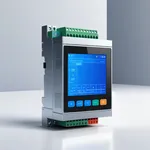
Introductory Guide to PLCs: What is a PLC and How Does it Work?
by MectProgrammable Logic Controllers (PLCs) are among the fundamental pillars of industrial automation. In this article, we will explore what PLCs are, their history, how they work, their main components, and the programming languages used. We will also discover how these devices have become essential to modern industry and what solutions Mect offers to meet market needs.
What is a PLC?
A PLC is a programmable logic controller, an electronic device that is used to manage and monitor automated processes in industrial environments. Unlike traditional electromechanical controllers, PLCs are flexible and can be programmed to perform different functions according to the user's specific needs.
PLCs are commonly used in various fields, such as industrial automation, process control, plant management and production line supervision. Their versatility makes them indispensable for optimizing processes, reducing costs and improving efficiency.
The History of PLCs
PLCs emerged in the 1960s as a response to the limitations of electromechanical control systems, which were rigid, cumbersome and difficult to modify. The first PLC, called "084" and developed by General Motors and Burroughs Corporation, replaced traditional relay and contactor systems, offering a more efficient and flexible solution.
Over the years, PLCs have evolved significantly from electromechanical devices to microprocessor-based solutions. Today, PLCs integrate advanced features such as networking, software-based programming, and integration with supervisory and monitoring systems.
The Main Components of a PLC
A PLC consists of several key components that define its operation:
- Central Processing Unit (CPU): This is the "brain" of the PLC, responsible for executing instructions and handling data.
- I/O (Input/Output) Mod ules: These modules allow sensors, actuators and other devices to be connected. Inputs (Inputs) receive signals from the field, while outputs (Outputs) send commands to devices.
- Memory: The PLC uses a memory to store the program, data and settings.
- User Interface: Many modern PLCs are equipped with human machine interface (HMI) operator panels that allow processes to be visualized and managed in real time.
How does a PLC work?
The operation of a PLC is based on a continuous cycle of reading, processing, and writing:
- Reading Inputs (Input): The PLC acquires signals from sensors and input devices.
- Program Processing: The CPU executes the stored program instructions by processing the input data.
- Writing Outputs (Output): The PLC sends commands to actuators and output devices based on the result of processing.
- Monitoring and Control: The cycle constantly repeats, ensuring precise and continuous control of the process.
Programming Languages Used in PLCs
PLCs are programmed using different languages, defined by IEC 61131-3. The main programming languages are:
- Ladder Diagram (LD): The most widely used, simulating traditional electromechanical circuits.
- Function Block Diagram (FBD): Based on the use of function blocks to graphically create the program.
- Structured Text (ST): A textual language similar to those used in computer programming.
- Sequential Function Chart (SFC): Ideal for managing sequential processes.
- Instruction List (IL): A textual language that uses instructions to control processes.
Mect offers Mect Suite software, an open source development environment that makes PLC programming easy and intuitive, even for those without special training.
The Role of PLCs in Industrial Automation
PLCs are the foundation of modern industrial automation. Due to their flexibility, reliability and integration capabilities, they enable:
- Optimize Processes: Automating repetitive operations reduces errors and increases efficiency.
- Monitor and Supervise: PLCs integrated with HMI and monitoring software enable real-time visualization of process status and prompt action.
- Integrate with Industry 4.0: Modern PLCs support advanced communication protocols and can be integrated with IoT and data analytics systems.
Mect's Solutions for Industrial Automation
Mect, an Italian manufacturer of industrial automation devices since 1982, offers a full range of PLC and HMI solutions designed to meet the needs of small, medium and large enterprises.
- PLC with Integrated I/O: Compact and high-performance solutions, ideal for space-constrained applications.
- HMI Operator Panels: Touch-screen devices with integrated software for intuitive process management.
- Mect Suite: Open source development environment for device programming and monitoring.
- Service and Support: Prompt and competent customer service, accompanying the customer at every stage of the project.
Conclusion
PLCs are a key element in industrial automation due to their flexibility, reliability and adaptability. As technology has evolved, these devices have become increasingly integrated and intelligent, supporting companies on their path to Industry 4.0.
Mect, with its experience and expertise, offers innovative and customized solutions to accompany companies on this path of innovation. If you are looking for a reliable partner for your automation projects, Mect is the right choice.